
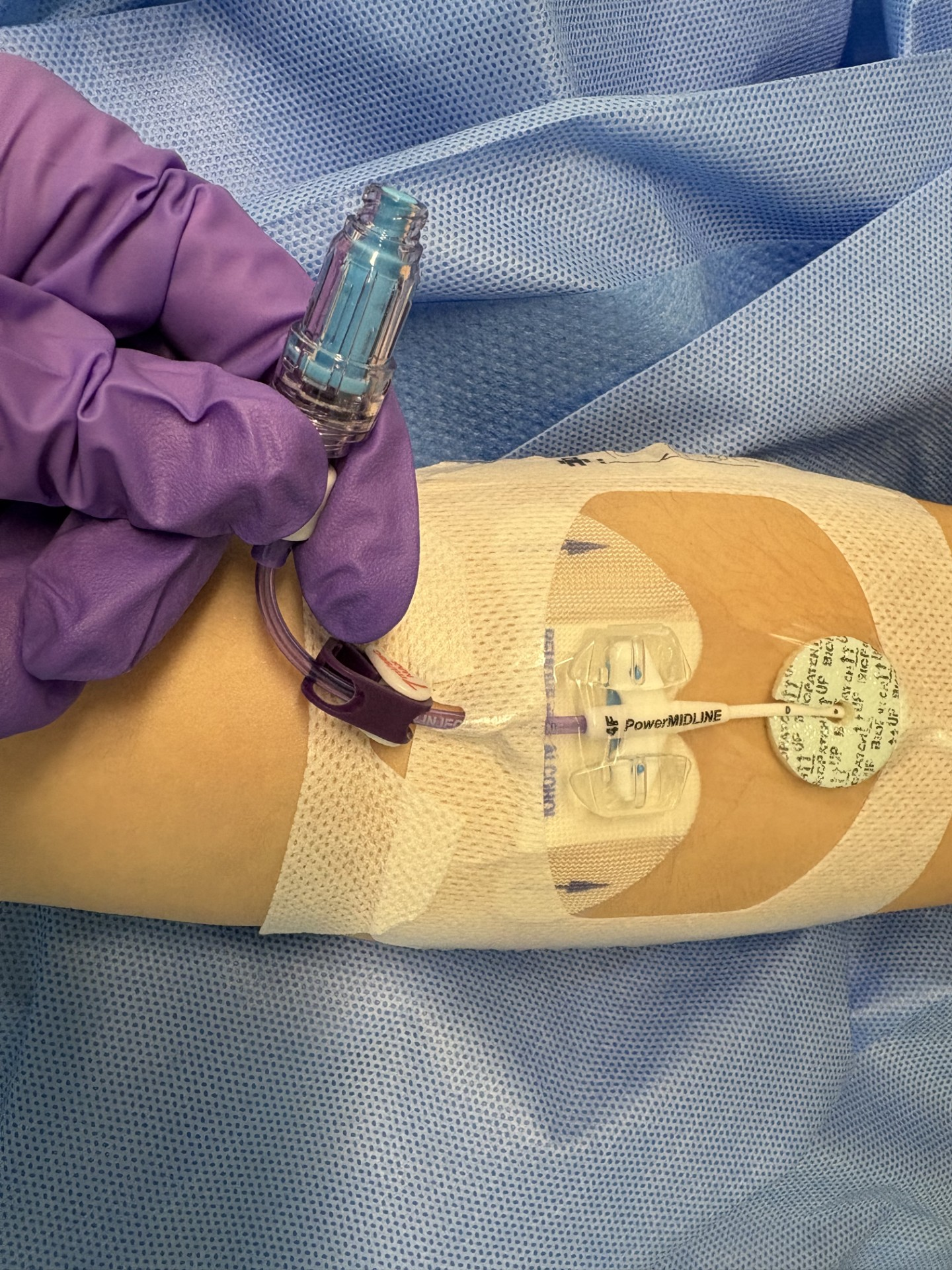
Healthcare leaders are under constant pressure to balance patient safety, infection prevention, staffing efficiency, and cost control. Central lines are critical to delivering long-term therapies, but they can increase patient risk and drive up costs when they aren’t managed properly. That’s why knowing how long a central line can stay in place is an essential clinical and operational question.
When facilities follow evidence-based guidelines and partner with experienced vascular access teams, they can reduce complications, shorten length of stay, and improve outcomes across the care continuum. Read on to explore PICC nursing guidelines, best practices for central line duration, and how a specialized vascular access partner supports safer, more efficient care.
How Long Can a Central Line Stay in Place, Really?
The answer to how long a central line can stay in place depends less on a fixed number of days and more on ongoing clinical necessity, proper placement, and vigilant monitoring.
In general, central lines (including PICC lines) can remain in place as long as they are clinically indicated and functioning without complications, and used in accordance with the manufacturer’s instructions for use (IFU). There is no universal expiration date. Instead, best practices emphasize:
- Daily assessment of line necessity
- Strict adherence to maintenance protocols
- And prompt removal when therapy is complete, or risk outweighs benefit
This is where PICC nursing expertise becomes essential. Skilled vascular access clinicians ensure lines are placed correctly, monitored consistently, and removed at the appropriate time, which protects both patients and facilities.
Operational and Cost Benefits of Following Central Line Best Practices
Efficiency Gains
When central lines are placed correctly the first time and assessed daily for necessity, facilities can avoid delays in treatment and repeated procedures. Dedicated vascular access teams help initiate therapy sooner, reduce bed holds, and support smoother patient throughput.
Dynamic Access teams, for instance, respond 24/7/365, often in under 2.5 hours, ensuring vascular access never becomes a bottleneck in care delivery.
Cost Reductions
Improperly managed central lines lead to avoidable costs due to factors like reinsertion, treatment delays, and extended length of stay. Hospitals partnering with Dynamic Access, in contrast, have achieved:
- 8.4% reductions in average length of stay
- Up to $4 million in annual savings across all ICDs
These savings stem directly from doing vascular access right the first time.
Reduced Complications
Unnecessary line days increase the risk of CLABSI, thrombosis, and mechanical failure. With 96%+ first-attempt success rates and 99%+ overall success, Dynamic Access minimizes complications that drive up costs and negatively impact quality metrics.
Clinical and Patient Benefits of Central Line Best Practices
Improved Outcomes
Following PICC nursing guidelines ensures central lines remain in place only as long as they are needed. This reduces infection risk and maintains reliable access for therapy. Accurate placement and standardized maintenance protocols support safer care at every stage.
Continuity of Care
Patients often transition between hospitals, LTACHs, rehab centers, and long-term care facilities. A consistent vascular access partner helps maintain continuity across settings, reducing errors during handoffs and ensuring lines are managed appropriately throughout the patient journey.
Patient Education and Experience
PICC nursing care extends beyond placement. Patients and caregivers benefit from education on line care, signs of complications, and when to seek help. Fewer needle sticks, fewer replacements, and clearer communication all contribute to a better patient experience.
Real-World Results from Experienced Vascular Access Teams
Hospitals and health systems partnering with Dynamic Access consistently see measurable improvements tied to better central line management, including:
- Reduced length of stay
- Lower readmission rates
- Fewer complications tied to prolonged or unnecessary line use
- And millions in annual cost savings
These results demonstrate that understanding how long a central line can stay in place, and managing that decision correctly, has a direct impact on both clinical and financial performance.
See how our partners achieved up to $4 million in annual savings in our latest case study.
Partner with Dynamic Access
When central lines are properly managed and removed when needed, complications decrease drastically. With the right partner, healthcare organizations can follow PICC nursing guidelines, reduce risk, and improve outcomes across every care setting.
Dynamic Access combines specialized expertise and rapid response to help facilities manage central lines safely and efficiently, from initial placement to removal.
Contact Dynamic Access today to learn how we can support your vascular access program, improve patient outcomes, and strengthen operational performance.